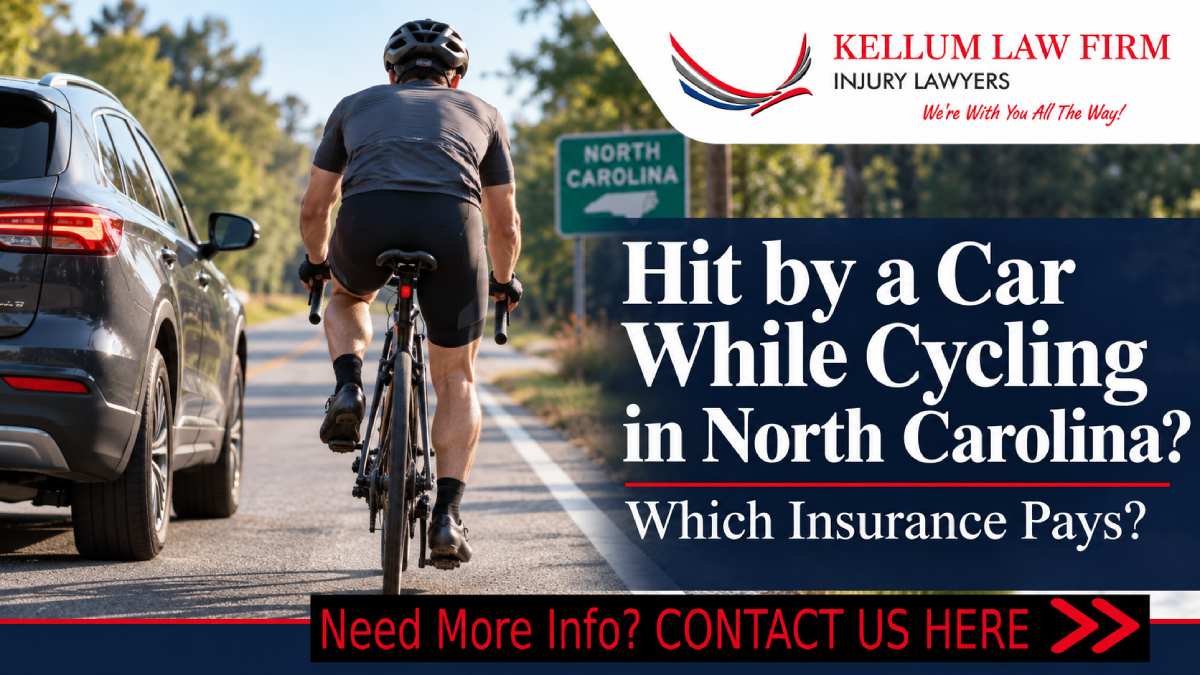
Hit by a Car While Cycling in North Carolina: Which Insurance Pays?
If you were hit by a car while riding a bicycle in North Carolina, one of the first practical questions is usually simple: who pays the medical bills?
The answer can be more complicated than people expect. A bicycle crash may involve the driver’s auto insurance, your own auto insurance, health insurance, uninsured or underinsured motorist coverage, MedPay, or even a commercial policy if the driver was working at the time of the crash.
At Kellum Law Firm, we help injured cyclists understand which insurance policies may apply, what each insurer is responsible for, and how to protect the claim before an adjuster tries to narrow the case too quickly.

Start With the At-Fault Driver’s Liability Insurance
When a driver causes a crash with a cyclist, the driver’s bodily injury liability insurance is usually the first place to look for compensation. This coverage may apply to losses such as:
- Emergency treatment and hospital bills
- Follow-up medical care
- Physical therapy and rehabilitation
- Lost income
- Pain and suffering
- Permanent injury or disability
- Wrongful death damages in fatal bicycle accidents
The driver’s property damage liability coverage may also apply to the bicycle itself, damaged cycling gear, clothing, helmet, phone, watch, or other personal property damaged in the crash.
However, the fact that a driver has insurance does not mean the insurance company will automatically accept responsibility. Adjusters may question fault, argue that the cyclist was not visible, claim the cyclist failed to follow traffic laws, or try to minimize the seriousness of the injuries.
North Carolina Bicycle Accident Claims Often Turn on Fault
In North Carolina, cyclists generally have the same rights and responsibilities as other road users. That means drivers must share the road safely, but cyclists are also expected to follow traffic laws that apply to bicycle operation.
This matters because North Carolina follows a strict contributory negligence rule. In simple terms, if the insurance company can successfully argue that the injured cyclist contributed to the crash, even slightly, it may try to deny the claim entirely.
That does not mean the insurance company is right just because it blames the cyclist. Bicycle crashes are often misunderstood. A driver may say the cyclist “came out of nowhere,” when the real issue was distracted driving, unsafe passing, failure to yield, speeding, dooring, or failing to keep a proper lookout.
Because fault disputes can be so important in North Carolina, injured cyclists should be cautious about recorded statements, informal conversations with adjusters, or accepting early blame before the crash has been properly investigated.

What If the Driver Has No Insurance?
If the driver who hit you does not have insurance, uninsured motorist coverage, often called UM coverage, may become important.
UM coverage is designed to protect injured people when the at-fault driver has no liability insurance or, in some situations, when the driver leaves the scene and cannot be identified. This can be especially important in bicycle hit-and-run cases.
For an injured cyclist, the relevant UM coverage may come from more than one possible place, including:
- The cyclist’s own auto policy
- Auto policies held by resident family members
- A household policy that covers the injured person as an insured
- Potentially another policy depending on the facts and policy language
Do not assume that UM coverage is unavailable just because you were riding a bicycle rather than driving a car. The policy language matters, and more than one household policy may need to be reviewed.
What If the Driver Has Insurance, But Not Enough?
Serious bicycle injuries can quickly exceed a driver’s insurance limits. A cyclist may suffer fractures, head trauma, spinal injuries, internal injuries, road rash, surgery, permanent scarring, or long-term loss of mobility. Even when the driver has insurance, the available liability coverage may not be enough.
That is where underinsured motorist coverage, or UIM coverage, may come into play.
UIM coverage may apply when the at-fault driver has liability insurance, but the driver’s available coverage is not enough to fully compensate the injured person. As with UM coverage, a lawyer should review the cyclist’s own auto policy and any household auto policies that may provide coverage.
This is one reason it is important not to settle too quickly. Once a liability insurer offers its policy limits, there may still be additional coverage issues to resolve. Accepting payment the wrong way, signing the wrong release, or failing to preserve a UIM claim can create avoidable problems.
Can MedPay Help After a Bicycle Accident?
Medical payments coverage, often called MedPay, can sometimes help pay accident-related medical expenses regardless of who was at fault. In a motor vehicle crash, MedPay may provide a smaller but useful source of early payment while the larger liability claim is still pending.
For cyclists, MedPay should be reviewed carefully rather than assumed. Whether MedPay applies may depend on the specific policy language and the circumstances of the crash.
If MedPay is available, it may help with out-of-pocket medical costs, deductibles, co-pays, ambulance charges, emergency room bills, or other medical expenses. It does not usually resolve the full injury claim, but it can be useful while the liability claim is being developed.

Will Health Insurance Pay Medical Bills First?
In many bicycle accident cases, the injured cyclist’s health insurance pays medical bills while the injury claim is pending. That can be helpful because a liability claim may take months to resolve, especially when injuries are serious or treatment is ongoing.
However, health insurance does not necessarily end the issue. If your health insurer pays accident-related medical bills, it may later claim a right of reimbursement from any settlement or recovery. This is often called subrogation or reimbursement.
That means the final settlement analysis should account for medical bills, health insurance payments, liens, reimbursement claims, unpaid balances, and future treatment needs. The goal is not just to get a settlement number; the goal is to understand what the injured person may actually keep after the claim is resolved.
What If the Driver Was Working?
If the driver who hit the cyclist was working at the time of the crash, additional insurance may be available. This can include delivery drivers, company vehicles, contractors, rideshare drivers, commercial vans, trucks, utility vehicles, or employees driving during work duties.
In those cases, the claim may involve:
- The driver’s personal auto policy
- A commercial auto policy
- The employer’s insurance
- A delivery or rideshare policy
- Another business or vehicle owner with legal responsibility
Commercial coverage can make a major difference in serious bicycle accident cases. It is important to identify these policies early before evidence disappears or an insurer tries to treat the crash as a simple personal auto claim.
Who Pays for the Bicycle and Damaged Gear?
The property damage side of a bicycle accident claim is separate from the injury claim. If the driver was at fault, the driver’s property damage liability coverage may be responsible for the reasonable value of the bicycle and damaged equipment.
That may include:
- The bicycle frame
- Wheels and components
- Helmet
- Cycling shoes and clothing
- Bike computer or GPS device
- Phone or smartwatch
- Lights, bags, racks, and other accessories
Keep the damaged bicycle and equipment if possible. Do not repair, discard, or sell the bike until photographs have been taken and the evidence has been preserved. In more serious cases, the bicycle itself may help show the point of impact, direction of travel, and force of the collision.
What to Do After Being Hit by a Car While Cycling
After a bicycle-versus-car crash, the steps you take early can affect both your health and your injury claim.
- Call 911 and make sure the crash is reported.
- Get medical attention, even if you are unsure how badly you are hurt.
- Photograph the scene, including the vehicle, bicycle, road, traffic signs, skid marks, debris, and visible injuries.
- Get the driver’s insurance information, license plate number, and contact details.
- Identify witnesses before they leave the scene.
- Preserve the bicycle and damaged gear instead of repairing or discarding them.
- Avoid giving a recorded statement before you understand your rights.
- Review all possible insurance policies, not just the driver’s policy.
Why Insurance Coverage Should Be Reviewed Early
One of the biggest mistakes after a bicycle accident is assuming there is only one insurance policy involved. In reality, the available coverage may depend on several questions:
- Was the driver insured?
- Was the driver working?
- Was the crash a hit-and-run?
- Does the cyclist have an auto policy?
- Does a resident family member have auto insurance?
- Is there MedPay coverage?
- Is there UM or UIM coverage?
- Are there health insurance liens or reimbursement claims?
- Was there a road defect, unsafe construction zone, or other contributing factor?
These questions matter because the first insurance company to contact you may not be the only insurer involved. It may not even be the insurer most important to the final recovery.
Talk With a North Carolina Bicycle Accident Lawyer
If you were hit by a car while cycling in North Carolina, you should not have to sort through the insurance issues alone. Bicycle accident claims can involve serious injuries, disputed fault, multiple insurance policies, and aggressive adjusters looking for ways to limit payment.
Kellum Law Firm helps injured cyclists and their families identify available insurance coverage, deal with adjusters, document injuries, and pursue fair compensation after serious crashes.
If you have questions after a bicycle accident, contact Kellum Law Firm for a free case review. We can help you understand which insurance may apply and what steps to take next.
Call 1-800-ACCIDENT or use our online form to request a free consultation.
Request a Free Case Evaluation
Related Resources
- North Carolina Car Accident Lawyer
- North Carolina Personal Injury Lawyer
- Kellum Law Firm Practice Areas
Source checks used for the legal/insurance framework: NC DOI explains current 50/100/50 liability requirements and t
Receive A Free Case Evaluation – No Obligation
~ RELATED CONTENT ~
What Is a Demand Letter in a Personal Injury Claim?

What Happens at Mediation in a North Carolina Personal Injury Case?

Bicycle Law in North Carolina