
Contributory Negligence in North Carolina Personal Injury Cases
North Carolina follows one of the strictest fault rules in the country. If an injured person is found even partly responsible for an accident, the insurance company may argue that they are barred from recovering compensation. This rule is known as contributory negligence, and it can affect car accidents, truck accidents, slip and fall claims, pedestrian injuries, motorcycle crashes, and many other personal injury cases.
Understanding how contributory negligence works, how insurers use it, and what evidence may help push back against it is critical after an accident – scroll down to learn more.

Navigating a personal injury case in North Carolina requires a clear understanding of the state’s fault rules. One of the most important is the doctrine of contributory negligence. Unlike many states that use comparative fault, North Carolina generally follows a much stricter rule: if the injured person contributed to the accident, even in a small way, recovery may be barred.
That does not mean every disputed case is lost. It does mean that fault evidence matters from the beginning. What happened at the scene, what witnesses saw, what the damage shows, what the accident report says, and how each person describes the event can all become central to the claim.

Contributory Negligence in North Carolina
Contributory negligence is a legal defense that may prevent an injured person from recovering compensation if they are found to have contributed to the accident. In practical terms, the insurance company may argue that the injured person was speeding, distracted, careless, failed to keep a proper lookout, ignored a hazard, or otherwise played some role in causing the incident.
This is different from comparative fault. In a comparative fault state, compensation may be reduced according to each party’s percentage of fault. In North Carolina, the rule is harsher. If contributory negligence applies, even a small percentage of fault may be used as a complete defense.
That is why fault matters so much in North Carolina accident injury cases. For more on this issue, see our related article: Why Fault Matters in North Carolina Accident Injury Cases.

How Contributory Negligence Affects Personal Injury Cases
Contributory negligence can affect a personal injury case at several stages. It may influence whether the insurance company accepts liability, whether a settlement offer is made, how much is offered, and whether litigation becomes necessary.
The issue is not always obvious. A defendant may admit that an accident happened but still argue that the injured person could have avoided it. In a vehicle accident, that may involve allegations about speed, lane position, following distance, reaction time, distraction, or failure to yield. In a premises liability case, the defense may argue that the hazard was open and obvious or that the injured person was not watching where they were going.
These arguments can be powerful because they do not require the defense to prove the injured person caused the entire accident. They only need to raise a contributory negligence argument strong enough to threaten recovery.
Why Insurance Companies Focus on Fault
Insurance companies understand how valuable contributory negligence can be as a defense in North Carolina. If they can point to evidence that the injured person was partly responsible, they may use that argument to deny the claim or reduce settlement pressure.
This often happens early. An adjuster may ask questions designed to uncover uncertainty or partial fault, such as whether you saw the other vehicle, how fast you were traveling, whether you could have stopped sooner, where you were looking, or whether anything distracted you.
These questions may sound routine, but the answers can affect the direction of the claim. Before giving detailed statements to an insurance company, injured people should understand how fault is being evaluated.
Common Examples of Contributory Negligence Arguments
Every case depends on its facts, but contributory negligence arguments commonly arise in the following situations:
- Car accidents: The defense may argue that the injured driver was speeding, distracted, following too closely, or failed to avoid the collision.
- Truck accidents: The trucking company or insurer may argue that another driver made an unsafe lane change, stopped suddenly, or contributed to the crash.
- Slip and fall claims: A property owner may argue that the hazard was open and obvious or that the injured person failed to watch where they were walking.
- Pedestrian accidents: The defense may argue that the pedestrian crossed outside a marked crosswalk, failed to look, or entered the roadway unexpectedly.
- Motorcycle accidents: The insurer may focus on speed, visibility, lane position, or whether the rider could have reacted differently.
The fact that an insurance company raises contributory negligence does not automatically mean the defense will succeed. These arguments often depend on the quality of the evidence.

Evidence That Can Matter in a Contributory Negligence Dispute
Because contributory negligence can become a complete defense, evidence is critical. The goal is to show what actually happened and to counter unsupported claims that the injured person caused or contributed to the accident.
Important evidence may include:
- Police reports and crash reports.
- Photographs of the accident scene.
- Vehicle damage and impact location.
- Surveillance, dashcam, or traffic camera video.
- Witness statements.
- Medical records showing the nature and timing of injuries.
- Cell phone records or other evidence relevant to distraction.
- Accident reconstruction analysis in more serious cases.
Thoroughly documenting the accident scene, preserving physical evidence, and securing witness statements can make a major difference when fault is disputed.
The Last Clear Chance Doctrine
Although North Carolina’s contributory negligence rule is strict, there is an important doctrine known as last clear chance. In some cases, this doctrine may allow an injured person to recover even if they were negligent, if the defendant had the final clear opportunity to avoid the injury and failed to do so.
Last clear chance does not apply in every case. It is fact-specific and can be difficult to prove. Generally, the issue is whether the injured person was in a position of danger, whether the defendant knew or should have known about that danger, whether the defendant had time and ability to avoid the harm, and whether the defendant failed to use reasonable care to prevent it.
This doctrine matters because it can sometimes prevent an unfair result where the injured person made a mistake, but the other party still had the final opportunity to avoid the accident.
Real-World Impact on Settlement Negotiations
Contributory negligence can affect settlement negotiations even before a case reaches court. If the insurance company believes it has a credible fault defense, it may deny liability, delay negotiations, or make a lower offer than the injuries appear to justify.
This does not always mean the claim is weak. Sometimes the insurer is relying on speculation rather than evidence. Other times, there may be a legitimate factual dispute that needs to be addressed through investigation, witness development, expert review, or litigation.
For injured people, the practical lesson is simple: do not assume the insurance company’s fault analysis is the final word. In North Carolina, even small details can matter.
Why Legal Representation Matters in North Carolina Fault Disputes
Because contributory negligence can be a complete defense, having experienced legal representation is especially important in disputed-fault cases. A skilled personal injury attorney can evaluate the evidence, identify weaknesses in the defense argument, preserve important proof, and build a case that addresses fault directly.
This is particularly important in serious injury cases where medical bills, lost income, pain and suffering, and long-term limitations are at stake. The higher the value of the claim, the more aggressively the insurance company may look for arguments that reduce or eliminate liability.
What to Do If the Insurance Company Says You Were Partly at Fault
If the insurance company claims you contributed to the accident, be careful about how you respond. Do not guess, argue, or offer explanations without understanding the evidence. Instead, focus on preserving information that may help clarify what happened.
- Save photographs, videos, repair records, and medical records.
- Write down what you remember while the details are still fresh.
- Identify witnesses and preserve their contact information.
- Do not post about the accident or fault on social media.
- Avoid giving recorded statements without legal guidance.
- Speak with a personal injury lawyer before accepting blame or signing anything.
For more on how disputed claims may proceed, see our article: What Happens at Mediation in a North Carolina Personal Injury Case?
Talk With a North Carolina Personal Injury Lawyer
In North Carolina, contributory negligence can change the outcome of a personal injury claim. If the insurance company is arguing that you were partly at fault, or if you are worried that fault may be disputed, it is important to get legal advice early.
At Kellum Law Firm, we understand how contributory negligence affects injury claims and how insurance companies use fault arguments to challenge compensation. If you were injured in an accident, our team can review the facts, explain your options, and help protect your claim.
Contact us today for a free case evaluation.
Frequently Asked Questions About Contributory Negligence in North Carolina
What is contributory negligence in North Carolina?
Contributory negligence is a legal rule that may prevent an injured person from recovering compensation if they are found to have contributed to the accident. North Carolina is one of the few states that still applies this strict rule in personal injury cases.
Can I recover compensation if I was partly at fault?
In many North Carolina negligence cases, being partly at fault can bar recovery. However, the facts matter, and doctrines such as last clear chance may apply in limited circumstances. You should not assume the insurance company is correct simply because it alleges partial fault.
How do insurance companies try to prove contributory negligence?
They may rely on statements, accident reports, witness testimony, photos, video, vehicle damage, medical records, or expert opinions. They may also ask questions designed to suggest that the injured person could have avoided the accident.
Does contributory negligence apply to car accident claims?
Yes. Contributory negligence is often raised in North Carolina car accident claims, especially when drivers dispute speed, distraction, right of way, following distance, lane changes, or reaction time.
What is the last clear chance doctrine?
Last clear chance is a doctrine that may allow an injured person to recover despite contributory negligence if the defendant had the final clear opportunity to avoid the injury and failed to do so. It is fact-specific and should be reviewed carefully by an attorney.

Receive A Free Case Evaluation – No Obligation
~ More Resources ~

Hit by a Car While Cycling in NC? Which Insurance Pays?
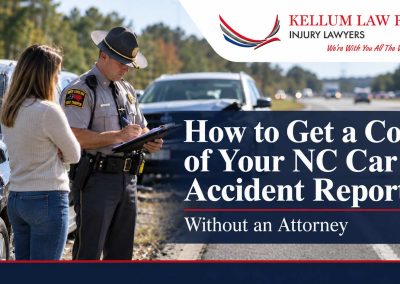
Obtaining A Copy Of Your Car Accident Report In NC Without An Attorney

Dog Bite Lawsuits in North Carolina: Owner Liability & Victims’ Rights

Work-Related Car Accidents in North Carolina | Your Rights
Featured And Recognized


RALEIGH | NEW BERN | WILMINGTON | JACKSONVILLE | MOREHEAD CITY | GREENVILLE | GOLDSBORO | WILLIAMSTON | ROCKY MOUNT | ROANOKE RAPIDS | DURHAM | FAYETTEVILLE | CHARLOTTE
Kellum Law Firm's corporate headquarters is located in New Bern, NC and has offices around North Carolina, including Raleigh, Greenville, Jacksonville, Wilmington, and more. We provide local residents with legal services focusing on personal injury law including automobile accidents, social security disability, workers' compensation, elder abuse, and more.