
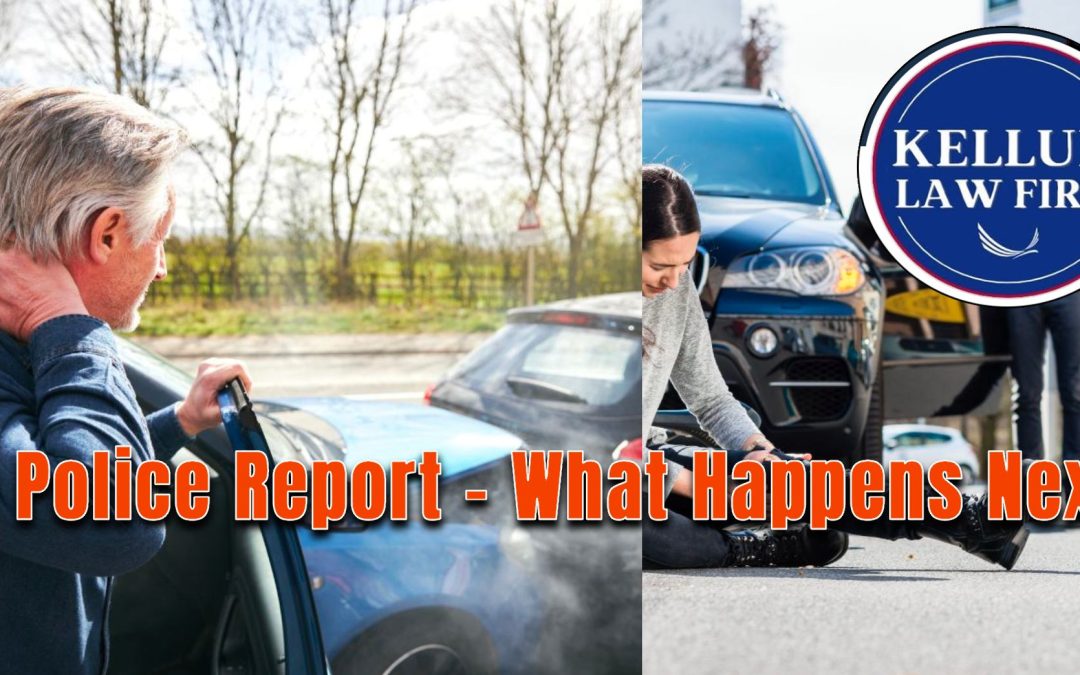
When two drivers disagree about who caused an accident, a police report can become an important piece of the claim. But what happens when there is no police report, no clear witness, and both drivers say the other person was at fault?
In this short video, Kellum Law Firm explains how disputed-fault accident claims are evaluated, why evidence becomes so important, and what drivers should understand when there is no official report to rely on.
If you were injured in a crash and fault is being disputed, our North Carolina car accident lawyers can help you understand your options and protect your claim.
Watch the video below.
Video Transcript
Welcome to Kellum Law Firm’s YouTube channel.
Let’s say you’ve been in an accident… there’s no police report… and both drivers are blaming each other.
So what happens next?
This situation is more common than people think, and it can get complicated quickly.
Because without a police report, there’s no official version of events.
There’s no officer documenting what happened, no immediate determination of fault, and no neutral third party stepping in at the scene.
So now the claim becomes about one thing…
Evidence.
Each insurance company is going to look at the same basic question…
Who is more likely to be responsible for what happened?
And to answer that, they start piecing things together.
Your statement.
The other driver’s statement.
Photos from the scene.
Damage to the vehicles.
Any available video, like dashcams or nearby security footage.
Even small details, like where the damage is located on each car, can tell a story.
And sometimes those stories don’t match.
When that happens, insurance companies don’t just pick a side randomly.
They evaluate credibility.
They look at consistency.
They compare what’s being said to what the physical evidence suggests.
In some cases, they may decide one driver is primarily at fault.
In others, they may split fault between both drivers.
And that matters.
Because in states like North Carolina, fault can directly affect whether you recover anything at all.
If you’re found to be even partially at fault, it can have a serious impact on your ability to recover compensation.
That’s why these cases need to be handled carefully.
What you say early on matters.
How you describe the accident matters.
And whether there’s supporting evidence to back it up matters.
If there were no witnesses at the scene, it doesn’t mean you’re out of options.
But it does mean the case may come down to how well the facts are documented after the accident.
Photos, timelines, vehicle damage, medical records… all of it becomes more important.
And if new evidence comes to light later, that can change how the claim is evaluated.
At Kellum Law Firm, we see cases like this where it’s one person’s word against another…
and the outcome depends on how clearly the facts can be presented and supported.
If you’ve been in an accident and there’s no police report, don’t assume the claim will just sort itself out.
Take the time to understand what evidence exists, what may still be available, and how your version of events is being interpreted.
Because when fault is disputed, the details matter more than ever.
Thank you for watching. If you found this content useful, please hit like and subscribe, and visit us at kellumlawfirm.com.
Related Resources
- Obtaining a Copy of Your Car Accident Report in NC Without an Attorney
- 6 Good Reasons to Report a Minor Car Accident or Fender Bender
- Should You Get a Lawyer After an Accident in North Carolina?


