Who Pays When Health Insurance Denies Your Injury Claim?

Why Insurance Claims Get Denied
Insurance denials are more common than most people realize. Some of the most frequent reasons include:
- Claims submitted outside of network or without prior approval.
- Disputes over what treatment is deemed “medically necessary” for a particuar type of injury.
- Errors in billing codes or late claim filing.
- Misunderstandings over pre-existing conditions.
Whatever the reason, a denied claim can set off a chain reaction of unpaid bills, missed work, and unnecessary stress. At Kellum Law Firm, we can help you untangle this process—and fight back. Our firm starts with a simple process: a free case review. There’s no obligation to retain us, and you won’t pay any fees unless we win your case.
What If No One Wants to Pay?
Even if your health insurance denies payment, you still have options. If someone else caused your injury, the at-fault party’s liability insurance may be responsible for the full cost of your treatment. At Kellum Law Firm, we work to recover those costs for you while coordinating with providers and insurers to keep your care uninterrupted.
We also handle lien disputes, negotiate provider charges, and ensure that any eventual settlement reflects the full value of your injury—especially if your health coverage failed you when you needed it most.
Avoiding Soaring Medical Costs
We’ve written more about this topic in our article on Avoiding Soaring Medical Bills After an Accident. When insurance denies a claim, hospitals and providers often try to collect directly from the injured person. But you don’t have to face that situation alone.
How Kellum Law Firm Can Help
Our legal team can step in early to challenge denied claims, preserve your right to compensation, and make sure that medical debt doesn’t derail your recovery. We understand the complex dance between health insurance, liability insurance, Medicare, and provider liens—and we use that knowledge to help protect you.
If you’re wondering whether you have a case, take a moment to explore our Notable Case Results and see the outcomes we’ve secured for others in your position. You can also browse our Client Testimonials to hear what people have to say about working with us.
Frequently Asked Questions
Q – Can I still get compensation even if my health insurance denies the claim?
A – Yes. In many cases, the at-fault party’s insurance or another responsible party can still be held liable and can pay your medical expenses. We help pursue those options even when health insurance fails.
Q – What should I do first if my treatment is denied?
A – Start by gathering a copy of the denial and all medical records. Then contact us. We’ll review the situation and explain your legal options in plain terms.
Q – What if I already paid out of pocket?
A – Even if you’ve already paid some or all of your bills, you may still be able to recover that money through a settlement or court judgment. Keep all receipts and contact us asap.
Q – Will Kellum Law Firm handle negotiations with hospitals and doctors?
A – Yes. We routinely work with providers and collections departments to negotiate down bills, delay collections efforts, and resolve liens as part of your injury case.
Q – Is there a time limit for taking legal action?
A – Yes, North Carolina has strict deadlines for filing injury claims. If insurance is giving you the runaround, don’t wait. Contact our Personal Injury Law Firm right away so we can preserve your rights.
Talk to a Law Firm That Fights for You
Insurance companies don’t always play fair. When they deny coverage you’ve paid for, it’s time to take action. At Kellum Law Firm, we help injury victims challenge unfair denials, recover medical costs, and move forward with confidence.
Don’t let a denied claim ruin your recovery—contact us today for a free case review.

Common Injuries That Insurers Often Question or Deny
Not all injuries are treated equally by health insurance providers—especially when an accident or third-party liability is involved. Here are some of the most frequently challenged injuries during the claims process, along with why they raise red flags for insurers:
- Whiplash and Soft Tissue Injuries: These are among the most common injuries after car accidents, yet they’re often met with skepticism by insurers. Because soft tissue damage doesn’t always appear clearly on X-rays or MRIs, insurance adjusters may claim there’s insufficient evidence to support your pain or limitations.
- Concussions and Mild Traumatic Brain Injuries (TBI): Head injuries can be difficult to prove, especially if initial scans are inconclusive. Insurance companies may argue that symptoms like memory loss, dizziness, or emotional changes are unrelated or exaggerated—despite the long-term consequences that TBIs can cause.
- Spinal Injuries and Herniated Discs: Back and neck injuries frequently draw scrutiny, particularly when there’s a pre-existing condition involved. Insurers often argue that the injury was not caused by the recent accident but was instead a pre-existing degenerative issue—requiring strong medical documentation and legal support to dispute. Here’s an article covering the topic of car accidents and pre-existing conditions: Car Accident Injury Claims and Pre-Existing Conditions
- Psychological Trauma and PTSD: Emotional and psychological injuries—while real—are frequently undervalued or dismissed by insurance providers. Claims for anxiety, depression, or PTSD following a traumatic event may be denied unless supported by extensive treatment records and professional diagnoses. Here’s an article covering the topic of car accidents and PTSD: PTSD And Shock After Car Accidents
- Internal Injuries: Damage to internal organs or internal bleeding may not present obvious symptoms right away. If treatment is delayed or the full extent isn’t immediately documented, insurance companies may argue that the injury wasn’t caused by the accident at all.
- Joint Injuries (Shoulder, Knee, Elbow): Injuries to joints like rotator cuff tears or ACL damage are often questioned due to their potential to be pre-existing or sports-related. If the insurer believes the injury didn’t occur directly from the accident, they may try to deny the claim or reduce the payout.
- Burns and Skin Injuries: Burns sustained in vehicle fires, chemical spills, or workplace accidents often lead to complex claims—especially if the treatment involves plastic surgery or extended rehab. Insurers may challenge the necessity or duration of treatment, or even try to pin the cause on another policy. Learn more about our law firm and how we represent burn injury victims here.
These types of injuries can result in partial or full claim denials without a proper legal response. That’s why it’s important to have a personal injury law firm that knows how to document, challenge, and negotiate claims on your behalf—especially when insurers try to deflect responsibility.
The Data: Why Medical Costs Keep Climbing
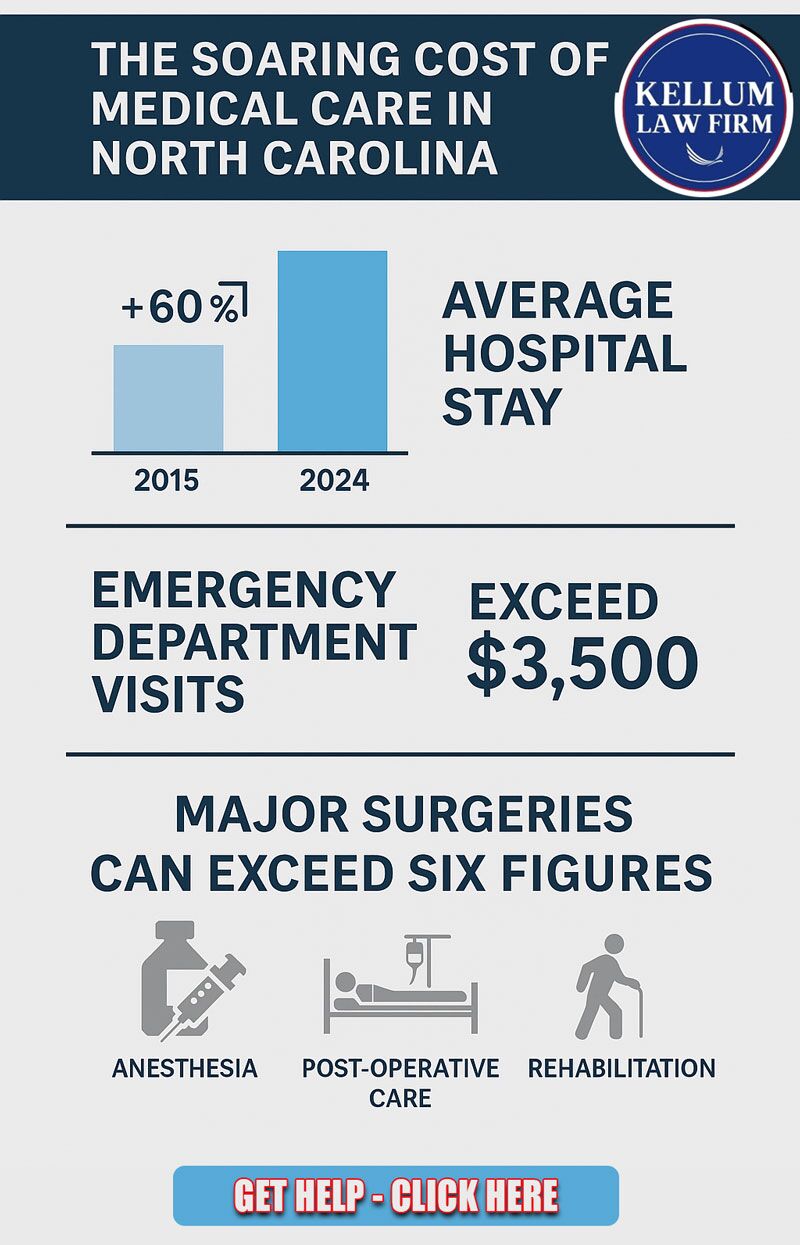
Healthcare costs are climbing faster than many people realize, creating real financial stress for accident victims in North Carolina. Between 2015 and the present, the average hospital stay cost has risen by more than 60% statewide, driven in part by aggressive commercial pricing that exceeds Medicare rates by over 700% on some routine services. Even simple tests like urinalysis can vary dramatically in cost across North Carolina hospitals — with some billing up to 12 times what more affordable hospitals charge.
On a national level, the AHRQ reported that in 2021, the average cost per emergency department visit for treat-and-release cases was approximately $750—though this figure is even higher for older patients. In contrast, many North Carolina ER visits we’ve seen for accident-related injuries now routinely exceed $3,500 due to complexity, facility fees, and billing practices that stretch far beyond national averages.
Adding to the economic burden, hospitals in North Carolina have chased significant Medicare profits, even when lawmakers described a “$3.1 billion shortfall.” In reality, some systems posted profits—like Atrium Health, which reported nearly $120 million in Medicare profit in a single year—despite their public financial claims.
These high costs aren’t just numbers—they hit real people, hard. Without strong legal advocacy to help ensure fair compensation, even insured patients face growing debt while trying to recover from injuries.
If you’re overwhelmed by medical bills after a crash, our NC personal injury attorneys can help level the playing field.
Even minor accidents often lead to surprisingly high bills. Without proper representation, victims may find themselves paying out of pocket for expenses they never anticipated.
When Coverage Isn’t Enough: What Most Insurance Plans Leave Out
Insurance is supposed to provide peace of mind after an accident—but all too often, it comes with limits and exceptions that leave victims exposed. As a personal injury law firm in North Carolina, we routinely see cases where valid claims are denied, underpaid, or delayed. Here’s how gaps in coverage can leave you footing the bill:
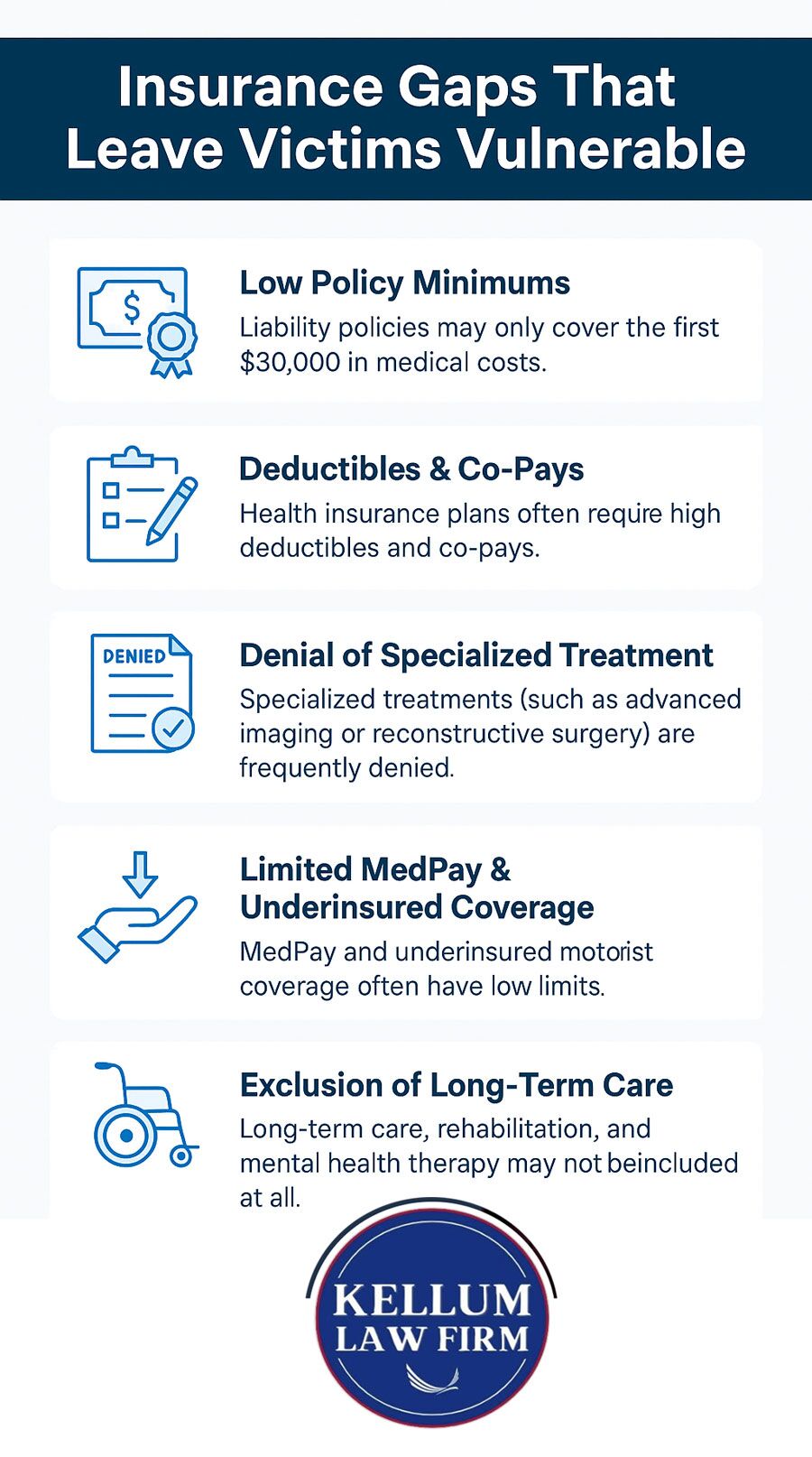
- Outdated liability minimums: Despite a recent change in 2025, North Carolina’s current bodily injury liability minimums remain at $30,000 per person and $60,000 per accident. Even after the increase, these amounts may not come close to covering real-world medical costs following a serious crash.
- Hidden out-of-pocket expenses: High deductibles and co-pays in health insurance plans can result in thousands of dollars owed before any coverage kicks in. Prescription costs, imaging tests, and emergency services often fall into grey areas where insurers delay or outright deny payment.
- Pre-approval delays for urgent care: Procedures such as MRIs, orthopedic surgery, or trauma-related mental health care frequently require prior authorization. These delays are frustrating—and sometimes dangerous—when immediate treatment is needed.
- Limited supplemental auto insurance: Medical Payments (MedPay) coverage in North Carolina is not required and usually minimal. Even drivers with Underinsured Motorist (UIM) coverage may find themselves under-protected once hospital bills, follow-ups, and rehab stack up.
- Chronic care and recovery exclusions: Long-term needs like physical therapy, pain management, or psychological support are often excluded from both auto and health insurance policies, leaving survivors without crucial recovery tools.
Insurance is just one piece of the puzzle. A skilled personal injury law firm in North Carolina like Kellum Law Firm can help you uncover hidden options, file effective appeals, and pursue compensation through every available channel—including avenues your insurance provider won’t tell you about.


When Your Insurance Denies the Claim—We Step In to Pursue the At-Fault Party
At Kellum Law Firm, it’s not uncommon for clients to come to us after hitting a wall with their own insurance provider. Whether it’s a health plan that rejects treatments as “not medically necessary” or an auto insurer that disputes coverage, these denials can leave injured individuals feeling powerless. That’s where we come in – and where we shift the focus to the other party’s insurance company.
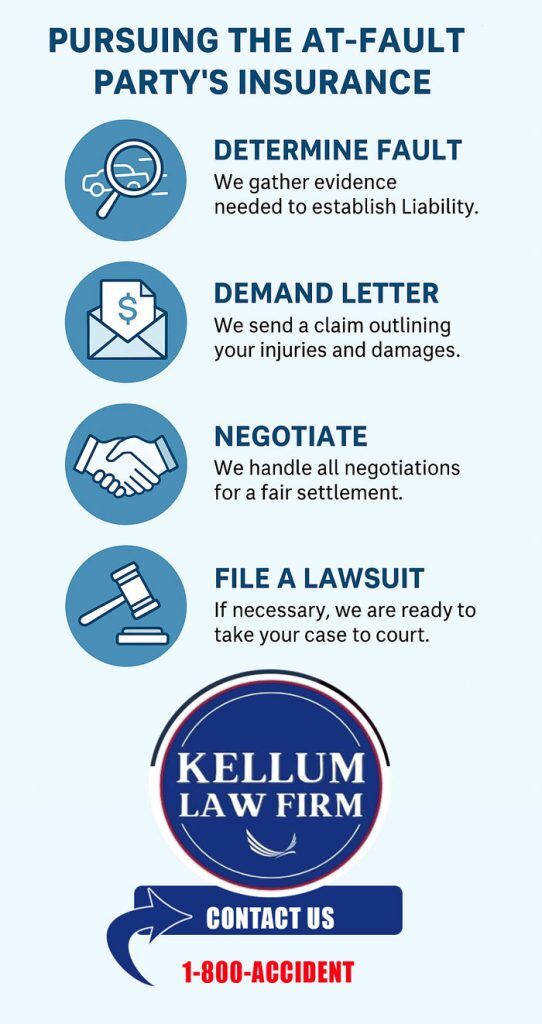
Our first step is to determine liability. Before we can pursue compensation from the at-fault driver’s insurer, we gather and preserve the evidence needed to prove fault. This often includes reviewing accident reports, surveillance footage, witness statements, and medical documentation. Once liability is clearly established, we send a formal demand letter to the at-fault party’s insurance carrier outlining your injuries, treatment, lost wages, and damages – including those your own insurance refused to cover, and out of pocket expenses incurred by you.
Many people assume they must rely on their own health or auto insurance first, but if another party caused your injuries, their insurer is legally responsible for the full scope of damages. These may include hospital bills, ongoing medical care, physical therapy, lost wages, and pain and suffering. However, insurance companies don’t write checks willingly, they look for every reason to delay, devalue, or deny your claim. Our job is to make sure that doesn’t happen.
We handle all correspondence and negotiations with the at-fault insurer so that you don’t have to. If they offer a settlement, we scrutinize it to ensure it truly reflects the long-term impact of your injuries and not just the short-term costs. If they refuse to negotiate in good faith, we’re fully prepared to file a lawsuit and take the case to court.
Our attorneys have decades of experience doing exactly that, and we know how to pressure insurers into settling fairly or face the consequences.
If your own insurance company has let you down, you still have options. Start with a free consultation today. There’s no obligation and no fee unless we win.
Delaying Medical Care Can Cost You—Physically and Legally
After a car accident or serious injury, many people try to wait it out—hoping the pain will fade or the problem will resolve on its own. But this hesitation often leads to more than just a health setback. It can compromise the strength of your entire injury claim.
Insurance adjusters are trained to look for gaps in treatment. For example, if there’s a delay between the accident and your first doctor’s visit, they may argue that your injury wasn’t serious, or even that it wasn’t related to the accident at all. This kind of scrutiny can result in lowball offers, or outright denials, even when your injuries worsen over time.
From a legal standpoint, the longer you wait, the harder it becomes to connect your injuries to the accident in a verifiable, documented way. That’s why our personal injury attorneys at Kellum Law Firm emphasize the importance of seeking prompt treatment and maintaining a clear medical paper trail.
We regularly work with clients who didn’t realize the impact of delayed care until their claim was challenged. In these cases, we build a strong legal narrative using your records, bills, diagnostic results, and expert testimony to show the true extent of the harm.
The bottom line: if you’re injured, even if it feels manageable – get checked out right away. Then let our legal team fight to ensure you’re not punished for trying to “be tough.” Your health and your compensation depend on it.
What If the Other Driver’s Insurance Doesn’t Cover Your Losses?
Not every driver on North Carolina roads has sufficient insurance coverage. Some carry the bare legal minimum—currently just $30,000 per person for bodily injury—while others are completely uninsured. When you’ve been seriously hurt, these limits can fall short before the ambulance even arrives.
That’s where Uninsured Motorist (UM) and Underinsured Motorist (UIM) coverage becomes critical. These types of auto policies are designed to protect you when the at-fault party’s coverage isn’t enough—or doesn’t exist at all. But using them is far from automatic.
Insurers often treat UM and UIM claims like any other: with skepticism. They may demand excessive proof, offer reduced compensation, or delay the process until you’re desperate. At Kellum Law Firm, we understand these tactics, and we push back aggressively.
Our legal team reviews every layer of your insurance coverage—including your own auto policy—to identify all available options. If you’ve paid for UIM protection, we’ll make sure it’s used to its fullest. If necessary, we’ll take your insurer to court to recover what you’re owed.
It’s not just about being hit by the wrong driver—it’s about making sure your own protections aren’t used against you. Let our attorneys handle the insurance battle while you focus on getting better.
Here are some resources to help:
Underinsured Motorist Coverage in North Carolina.
5 Reasons Your Car Accident Claim Might Be Denied
Inside an Insurance Claim – How Adjusters Decide What to Pay
How To Claim Compensation Following A Crash With An Uninsured Motorist In North Carolina
As always, the content provided here is for general informational purposes only and does not constitute legal advice. Every case is unique, and you should consult directly with a qualified attorney to discuss your specific situation. Reading this article or using this website does not create an attorney-client relationship with Kellum Law Firm.

Why Work with Our Personal Injury Law Firm in North Carolina?
- Experience Handling Denials: We’ve helped countless clients after their insurance claims were denied or delayed—recovering compensation through alternative strategies and aggressive legal action.
- Free, No-Obligation Case Review: At Kellum Law Firm, it all starts with a free consultation. There’s no risk, no pressure, and no fee unless we win your case. Get started today.
- Focused on Full Recovery: We dig deep into your claim—including denied treatments, delayed diagnostics, and future care needs—to ensure nothing is left out of your injury settlement.
- Decades of Trust: Serving North Carolina since the 1960s, our law firm is built on reputation, results, and relationships. We’ve earned the trust of families across the state.
- See Our Results: We invite you to review our notable case outcomes and read testimonials from past clients.

Content Reviewed and Approved By:
Phillip Lopez – Attorney at Law
Personal Injury & Workers’ Compensation Attorney, Kellum Law Firm.
Read more about Phillip’s background and experience on his attorney bio page.
What You Should Do Right After an Accident
Even before you think about legal action, there are steps you can take to protect your health, your finances, and your claim:
- Keep every receipt, invoice, and letter from your health provider or insurance company—don’t throw anything away.
- Take clear photos of the accident scene, your vehicle and the other vehicle involved, and any visible injuries as soon as possible.
- Stick to your doctor’s treatment plan. Skipping appointments can damage both your recovery and your case.
- Track time missed from work, changes in job duties, or reduced income—this can be critical in calculating damages.
- If you need to miss time from work because of your injuries, talk to your doctor and obtain an out of work note.
- Never sign a settlement offer without speaking to an experienced personal injury attorney.
~Resources~
Explore Our Personal Injury Legal Guide Series
If you or a loved one has been injured in North Carolina, our free Personal Injury Legal Guide Series is a great place to start. Learn what to do after an accident, how to protect your rights, and when to speak with a qualified attorney.
Your Car Accident Legal Guide
Understanding your legal options after a car crash can be overwhelming. That’s why we created our Car Accident Legal Guide Series — covering everything from insurance claims to long-term care costs.
FREE CASE REVIEW – NO FEES UNLESS WE WIN
Helping Injured North Carolinians Recover What They Deserve
At
We begin with a simple step: a free, no-obligation case review. There’s nothing to lose, and potentially everything to gain.
Let’s Discuss Your Case
Just fill out the form below and a member of our team will reach out to explain your legal options and what happens next.
Featured And Recognized