
Can Dashcam Footage Help or Hurt Your Claim?
Dashcam footage can be one of the most useful pieces of evidence after a crash, but it is not automatically a silver bullet. Sometimes it clearly shows fault. Sometimes it raises new questions. Sometimes it helps one part of the case while creating problems somewhere else. The real issue is not just whether video exists. It is whether the footage is clear, complete, preserved properly, and consistent with the rest of the evidence.
At Kellum Law Firm, we help injured people look at dashcam footage the same way the insurance company and defense side will look at it, not just for what it appears to show at first glance, but for what it may actually prove, what it leaves out, and how it fits into the bigger claim. Dashcam video can be powerful, but only if the story it tells is complete enough to help rather than confuse the case.
Scroll down to learn more..

(Tip – If you’re unsure what a dashcam is, how it is used/accessed, and whether or not your vehicle has one, scroll down to the end of this article for an explanation.)
What kind of dashcam footage are we talking about?
If the dashcam clearly shows the crash happening:
That footage may strongly help prove who had the light, who crossed the center line, who failed to yield, or whether the impact happened the way one side claims.
If the dashcam only shows moments before the crash:
It may still be useful for speed, lane position, weather, road conditions, traffic flow, or what each driver was doing just before impact.
If the dashcam starts too late or cuts off too early
It may create more argument than clarity. Insurance companies often focus on the missing part just as much as the recorded part.
If the footage shows something embarrassing for the injured driver:
The video may still help on the major issue of fault, but it could also raise problems about speed, attention, statements made afterward, or whether the driver contributed to the crash.
When dashcam footage can strongly help a claim
Dashcam footage is often most useful when there is a direct dispute about how the crash happened. It can help show lane movement, traffic signal timing, following distance, road position, weather conditions, braking, and the sequence of events in the seconds before impact.
That can be especially important when one driver’s version of the crash does not line up with the physical evidence or witness statements. In those situations, video can move the case from “one story against another” to something much more concrete.

Ways dashcam footage may help
- Shows the impact or immediate lead-up clearly
- Supports your version of fault
- Undercuts a false statement by the other driver
- Documents road, weather, or traffic conditions
- Helps explain timing and sequence
Ways dashcam footage may hurt
- Shows conduct that may look careless or inconsistent
- Captures speed, distraction, or lane movement problems
- Leaves out a key moment and creates uncertainty
- Includes audio or statements that complicate the claim
- Looks less helpful once slowed down or examined closely
The biggest mistake: assuming the video “speaks for itself”
People often assume that once video exists, the case becomes easy. That is not always true. A clip can be blurry. The angle may be misleading. The most important event may happen just outside the frame. The timestamp may be off. The sound may not match what people later say happened. And sometimes the footage supports one part of the claim while weakening another.
That is why dashcam footage should be treated as evidence that needs context, not as magic proof.

Quick reality check
Good video does not guarantee a strong case. You still need medical proof, damages, and a clear explanation of how the injuries affected your life.
Bad-looking video does not automatically destroy a case. Sometimes footage only looks bad because it is incomplete, poorly framed, or stripped of context.
No video does not mean no case. Dashcam footage is useful, but many valid claims are proven through other evidence.
If the footage is on your own dashcam
If the video is on your own device, preserving it quickly matters. Dashcams often overwrite older footage. A file that feels safe because “it should still be there” can disappear faster than people expect.
You also want to avoid accidental editing, compression, or file loss. The cleaner and more complete the original file remains, the more useful it tends to be later if the insurance company disputes what happened.
This article should also connect naturally to your new evidence-preservation content once that page is live.
If the footage belongs to someone else
Sometimes the most important dashcam footage is not yours. It may belong to another driver, a rideshare vehicle, a delivery driver, or even a witness who happened to pass by. In those situations, timing matters. Evidence in private hands can vanish quickly if no one acts to preserve it.
That is one reason early investigation can matter so much in disputed crashes. A useful clip is only helpful if it can still be found, preserved, and tied back to the event.

A common real-world scenario
The good news: the dashcam appears to show the other driver entering your lane.
The problem: the clip also shows your vehicle moving faster than expected, and the final seconds are not as clear as you first thought.
What happens next: the insurance company may still have a liability problem, but it now has something to argue about. That means the video may help the claim and complicate it at the same time.
The lesson: video evidence is often strongest when it is treated as one part of a larger proof package, not the whole case by itself.
How insurance companies and defense lawyers are likely to view the footage
The defense side is not usually asking, “Does this generally look helpful to the claimant?” They are asking narrower questions. Can this clip be used to dispute fault. Can it be used to suggest distraction. Can it be slowed down or isolated in a way that helps their version. Does it create leverage for a lower offer. Does it line up with statements already made.
That is why the same piece of footage can be viewed very differently by each side. A claimant may see confirmation. An adjuster may see angles, gaps, or inconsistencies worth pressing.
If the claim is already moving into serious negotiation, this is where pages like How Insurance Companies Use Surveillance in Personal Injury Cases and your insurer-tactics content can reinforce the bigger picture.
Can dashcam footage be used in a lawsuit?
Potentially, yes. But like other forms of evidence, video usually has to be properly identified and tied to what it claims to show. In practical terms, that means the footage needs to be preserved, explained, and connected to the crash in a way that can stand up if the case goes deeper into litigation. North Carolina’s Rules of Evidence address authentication, and the broader civil discovery rules govern how parties seek and exchange evidence during litigation.
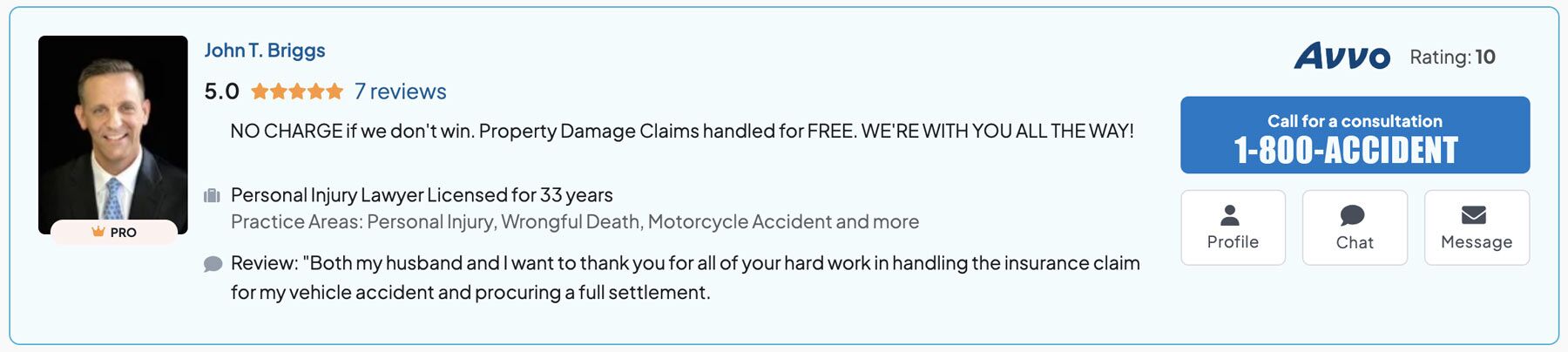
“Dashcam footage can be excellent evidence, but only if you resist the temptation to oversimplify it. The real question is not just what the camera caught. It is what the full case can prove once that footage is put in context.” — John T. Briggs, Managing Attorney
What to do if dashcam footage may matter in your case
- Preserve the original file as quickly as possible
- Do not assume a short clip tells the whole story
- Do not describe the footage too broadly before it is reviewed carefully
- Think about whether other video sources may also exist
- Make sure the video is evaluated alongside the rest of the evidence, not by itself
Frequently asked questions about dashcam footage after a crash
Can dashcam footage prove who caused a car accident?
Sometimes it can help strongly, especially when it clearly captures the impact or the events immediately leading up to it. But not every clip is complete enough to settle the issue by itself.
Can dashcam footage hurt my own injury claim?
Yes. If it shows conduct that looks inconsistent, careless, or damaging to your version of events, the insurance company may use it to reduce the value of the claim or dispute fault.
What if the video only shows part of the crash?
Partial footage may still help, but it can also create arguments about what happened outside the frame or just before recording started.
Should I send dashcam footage directly to the insurance company?
That depends on what the footage actually shows and how it fits with the rest of the case. In a serious claim, it is usually better to have it reviewed strategically before assuming it should be handed over immediately.
Can video be used later in court?
Potentially, yes, but it generally needs to be properly authenticated and handled as part of the broader evidence process. North Carolina’s evidence and civil discovery rules govern those issues.
What if I think another driver or witness has dashcam footage?
Act quickly. Evidence held by other people can disappear, be overwritten, or get lost if no one moves to preserve it early.
Talk to Kellum Law Firm About a Serious Accident Claim
If dashcam footage may be part of your case, the important question is not just whether a video exists. It is whether the footage helps, hurts, or changes the strategy of the claim once everything else is taken into account. Kellum Law Firm represents injured people across North Carolina in car accident, truck accident, personal injury, and other serious injury matters.
Request a free case evaluation or visit our office locations page to connect with our auto accident team, or call 1-800-ACCIDENT now.
“We’re With You All The Way”
Receive A Free Case Evaluation – No Obligation
Personal Injury Law Guide
If you're exploring your legal options after a personal injury, the following links offer helpful next steps—from local office pages to our detailed personal injury guide.
Personal Injury Locations
Personal Injury Guide
These resources are provided as general information and are not a replacement for professional legal advice. If you need help with a claim, please contact Kellum Law Firm for assistance.
Auto Accident Law Guide
After a car accident, having easy access to the right legal resources can make all the difference. The links below focus on local car accident help and detailed guides to navigating claims.
▶ Car Accident Locations
General Guides and Resources
Bookmark this page or check back often as we expand our car accident resources across North Carolina.
Official North Carolina Insurance Resources
For readers who want to review North Carolina insurance information directly from the state, these resources are a good place to start:
What Exactly Is a Dashcam?
A dashcam is a small video camera system that records what is happening around your vehicle while you drive and, in some setups, while the vehicle is parked. In the simplest form, it is a camera mounted near the top of the windshield that records the road ahead. More advanced systems may also record the rear of the vehicle, the cabin, or use built-in exterior cameras already installed by the manufacturer.
How Do Dashcams Work?
Most dashcams turn on automatically when the vehicle starts and begin recording right away. They usually record in short video segments rather than one long file. Many use what is called loop recording, which means the camera keeps recording over the oldest unprotected footage once the storage fills up. Some systems also have an impact sensor or manual save button that marks certain clips so they are less likely to be overwritten.
Where Is the Video Stored?
That depends on the type of dashcam. Many aftermarket dashcams store video on a microSD card inside the camera itself. Some factory-style or integrated systems store footage on a USB drive, a built-in drive, or allow clips to be downloaded through a phone app. In practical terms, that means the footage is usually stored locally in or with the vehicle, not automatically sent off somewhere else.
What Is the Typical Field of View?
Most consumer dashcams use a fairly wide lens so they can capture more than just the lane directly in front of the car. A common field of view is roughly 120 to 140 degrees. A wider lens can capture more of the road, sidewalks, and nearby traffic, but if it gets too wide the image can start to look distorted. So most dashcams try to strike a balance between coverage and clarity.
Can the Vehicle Owner Access or Erase the Footage?
In many cases, yes. With a typical aftermarket dashcam, the owner can often review footage through a phone app, remove the microSD card and open the files on a computer, or format the card inside the camera. With integrated vehicle systems, the owner may be able to access clips through the infotainment screen, a companion app, a USB drive, or a built-in viewer. It is also important to understand that footage does not always need to be manually erased to disappear. If loop recording is active, ordinary footage may simply be overwritten as new video is recorded.
Are Dashcams Installed by the Manufacturer or by Vehicle Owners?
Both. A large number of dashcams are aftermarket devices bought and installed by the vehicle owner. These are the small cameras you often see attached near the rearview mirror. But some manufacturers now offer integrated dashcams, dealer-installed OEM dashcams, or software-based recording features that use the vehicle’s existing cameras. That means a car can have a dashcam without having a separate little camera stuck to the windshield.
How Do You Know If Your Car Has a Dashcam?
If you are not sure whether your vehicle has one, start with the simplest checks first. Look behind or near the rearview mirror for a small lens, camera pod, or compact device mounted to the glass. Then check the glove box, center console, or USB ports for a memory card or USB drive that may be dedicated to video storage. After that, check the vehicle screen for menu names such as Dashcam, Drive Recorder, Sentry, Gear Guard, Camera, or Recorder.
It is also worth checking the owner’s manual, original window sticker, build sheet, or dealer accessory records. That matters because some cars have cameras for parking, surround view, or driver assistance, but those cameras do not always function as a true dashcam unless the vehicle has the recording feature enabled or installed.
What If You Bought the Car Used?
If you bought the vehicle used, do not assume you would immediately know a dashcam is there. Some OEM systems are designed to sit discreetly behind the rearview mirror, and some software-based systems only show up in the infotainment menus. A previous owner may also have removed the storage card or USB drive, which can make the feature look inactive even if the vehicle supports it.
If you bought the car used and want to find out whether it has a dashcam, here are the practical steps:
- Inspect the windshield area around the rearview mirror for a camera unit or lens.
- Check for a microSD card slot in the device itself, or a USB drive in the glove box or console.
- Look through the infotainment menus for any dashcam or drive recorder feature.
- Search the owner’s manual by VIN or model name for terms like “dashcam,” “drive recorder,” or “camera recording.”
- Call the dealer with the VIN and ask whether the vehicle was sold with an OEM dashcam, drive recorder feature, or integrated camera accessory.
How Would You Access It on a Used Vehicle?
If it is an aftermarket unit, access is usually through a phone app, the camera screen itself, or by removing the microSD card and opening the files on a computer. If it is an OEM or manufacturer-based system, access may be through the car’s touchscreen, a manufacturer app, or by exporting footage to a USB device. In a used car, one of the first things to check is whether the storage media is still present, because some systems will not save anything if the previous owner removed the card or drive before selling the vehicle.
Examples of Vehicles and Brands Known to Have Dashcam Capability or OEM Dashcam Options
There is no single industry standard, and features vary by year, trim, package, and market. But examples of vehicles and brands that are known to have dashcam capability or official OEM dashcam options include Tesla Model 3, Model Y, Model X, and Model S, which use the vehicle’s cameras and local USB storage; Rivian R1T and R1S, which use Gear Guard and Drive Cam features; BMW models equipped with Drive Recorder capability; and Lexus and Toyota models offered with integrated OEM dashcam accessories, including examples such as the Lexus RX 350, Lexus TX 500h, Lexus GX 550, Toyota Tacoma, Toyota Prius, Toyota RAV4, and Toyota Land Cruiser.
The main point is this: not every camera on a car is a dashcam, but plenty of modern vehicles either have one built in, support one through software, or can be fitted with an OEM integrated unit that is much less obvious than an aftermarket camera stuck to the windshield.
More Auto Accident / Injury Resources From Kellum Law Firm

Recorded Statements to Insurance Companies, The Hidden Risk After a Crash
Why “I Feel Fine” Can Cost You After a Car Accident
What Happens If the Other Driver Lies? How to Prove the Truth in a Disputed Accident
Hit and Run Accident Claims in North Carolina
Featured And Recognized












RALEIGH | NEW BERN | WILMINGTON | JACKSONVILLE | MOREHEAD CITY | GREENVILLE | GOLDSBORO | WILLIAMSTON | ROCKY MOUNT | ROANOKE RAPIDS | DURHAM | FAYETTEVILLE | CHARLOTTE
Kellum Law Firm's corporate headquarters is located in New Bern, NC and has offices around North Carolina, including Raleigh, Greenville, Jacksonville, Wilmington, and more. We provide local residents with legal services focusing on personal injury law including automobile accidents, social security disability, workers' compensation, elder abuse, and more.